
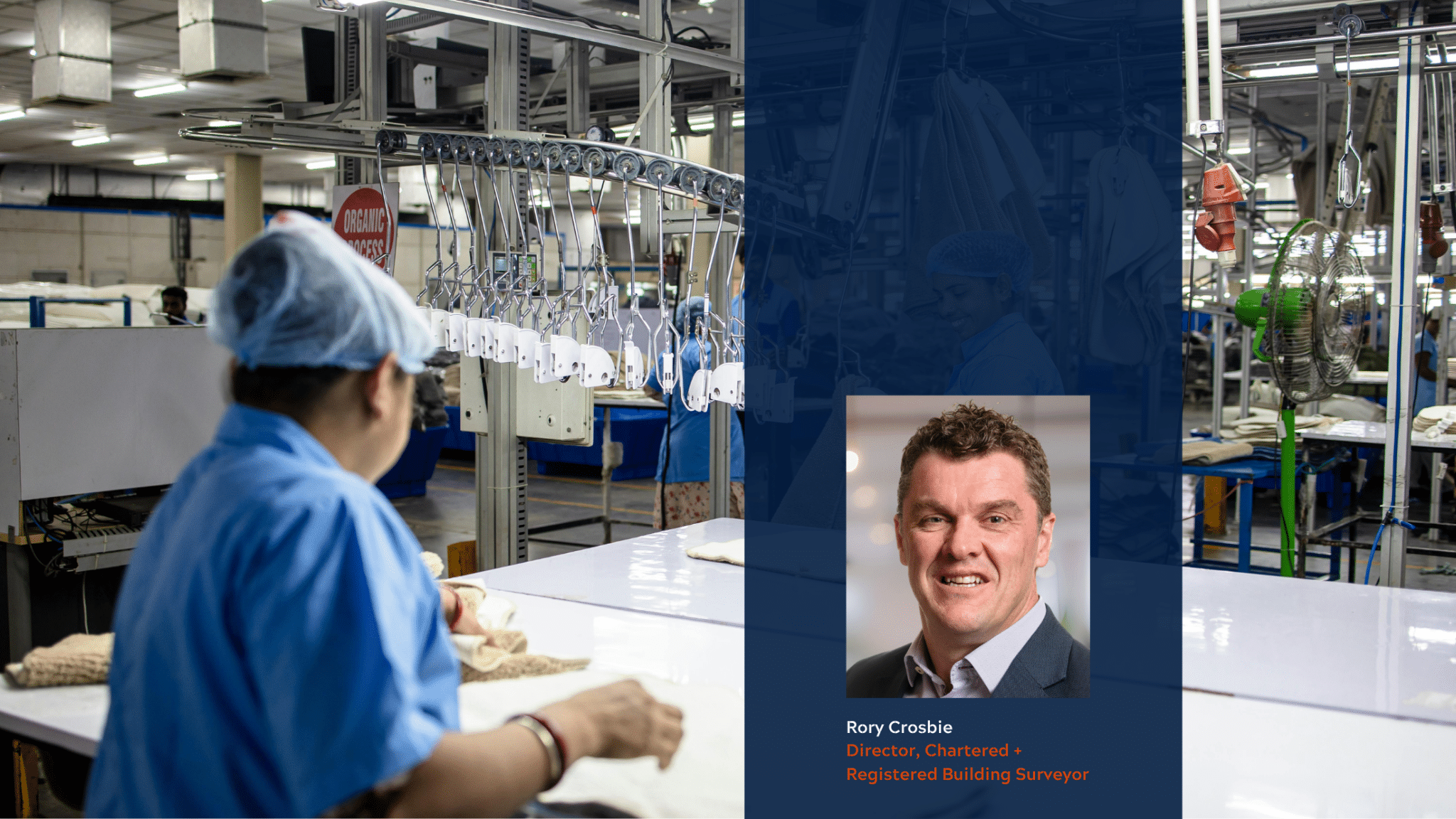
In a company acquisition, property assets can be seen as secondary to the main transaction – reduced to a line item in a broader due diligence exercise. But when the buildings are fundamental to the operation of the business – as with specialised processing, manufacturing or logistics facilities – it becomes a much more critical aspect of the deal.
Buildings can carry significant risk – building performance, reliability of plant and services, compliance obligations, future maintenance and operational constraints all affect the value and continuity of the business being acquired. That’s where technical due diligence (TDD) is especially valuable – revealing risks and opportunities associated with property assets that inform the overall acquisition.
And when those assets are highly specialised, the quality of the due diligence depends on having people who understand not just buildings, but the systems, services and operational requirements that make them work, and keep the business running.
Acquiring a complex operational asset
In a recent TDD engagement Prendos undertook, the business being acquired was a large scale meat processing operation. That meant the property side of the deal included several complex operational processing facilities, with specialised plant and machinery.
The purchaser was already well informed about the operation, with a high level of technical knowledge. As project lead and Prendos Director Rory Crosbie explains, our role was to provide an independent ‘sense check’ of the property portfolio.
“They understood how these production plants work, and were looking for reassurance that they hadn’t missed anything,” he says.
The right expertise, brought together quickly
For a facility like this, assessing building condition alone wasn’t sufficient. The TDD needed input from specialists who understood the complex services and plant, and how these interacted with the building itself.
The timescales were very tight, as is often the case with TDD engagements, and normal business operations meant gaining access to inspect the buildings was challenging.
Prendos quickly coordinated a team with building surveying, engineering and specialist services expertise. Access had to be planned around normal operations to minimise disruption to the business, so inspections were carried out by the full team on a Sunday, when production was not underway. Having the vendor present during inspections ensured compliance with health and safety requirements, and enabled the team to gather valuable insight into the facilities ‘on the fly’, as they surveyed each facility.
After inspecting the premises together, the multidisciplinary team completed their own assessments, ending up with a remarkably consistent analysis of each facility across disciplines.
“The client thought we’d sat down for a couple of days comparing notes,” Rory said. “But we actually hadn’t. We were all totally on the same page.”
That joined-up approach is particularly important for operational assets, where a building defect or services issue can quickly become a production, safety or business continuity issue.
Reporting tailored to the client’s needs
With an already well-informed purchaser and a tight transaction schedule, there was no need for a lengthy report explaining what they already knew. The client needed clear, independent reassurance, and a ‘red flag’ report highlighting anything that would materially affect the deal.
“Each job is slightly different in terms of the complexities and what it needs,” says Rory. “In this case the timescales were really tight, so they were happy for us to do more executive-summary-type reporting.”
That level of flexibility is critical in TDD where every client and every transaction is different.
“It’s not just cookie-cutter, off-the-shelf, this is our report template and you get what you get,” says Rory. “Our reporting is fully tailored around each client and their needs, so you get the best value when you engage us.”
In this case, the client was particularly pleased with the reporting provided. Tailored advice, provided by the right specialists, within the tight timescales of the acquisition process, giving them the confidence to move forward with the deal.
“They were shrewd buyers,” says Rory, “but they were very happy they’d got an independent review.”
When the building is fundamental to how a business operates, TDD is not simply about understanding the property. It is about understanding how the property could affect the value, continuity and future performance of the business being acquired, which could be critical to the value of the deal, and whether it progresses or not.
With the transaction now complete and the company in new ownership, Prendos continues to assist the client in developing detailed CapEx and R&M plans to inform building expenditure over the decades to come. With a view to increasing operational efficiency and maintaining asset value through well-considered investment, these inputs – guided by our existing deep knowledge of the facilities – will be an invaluable business tool for the new owner.
If we can assist you with your TDD requirements or you would just like to know more, please fill in the form below or contact us here and we will be in touch.

