
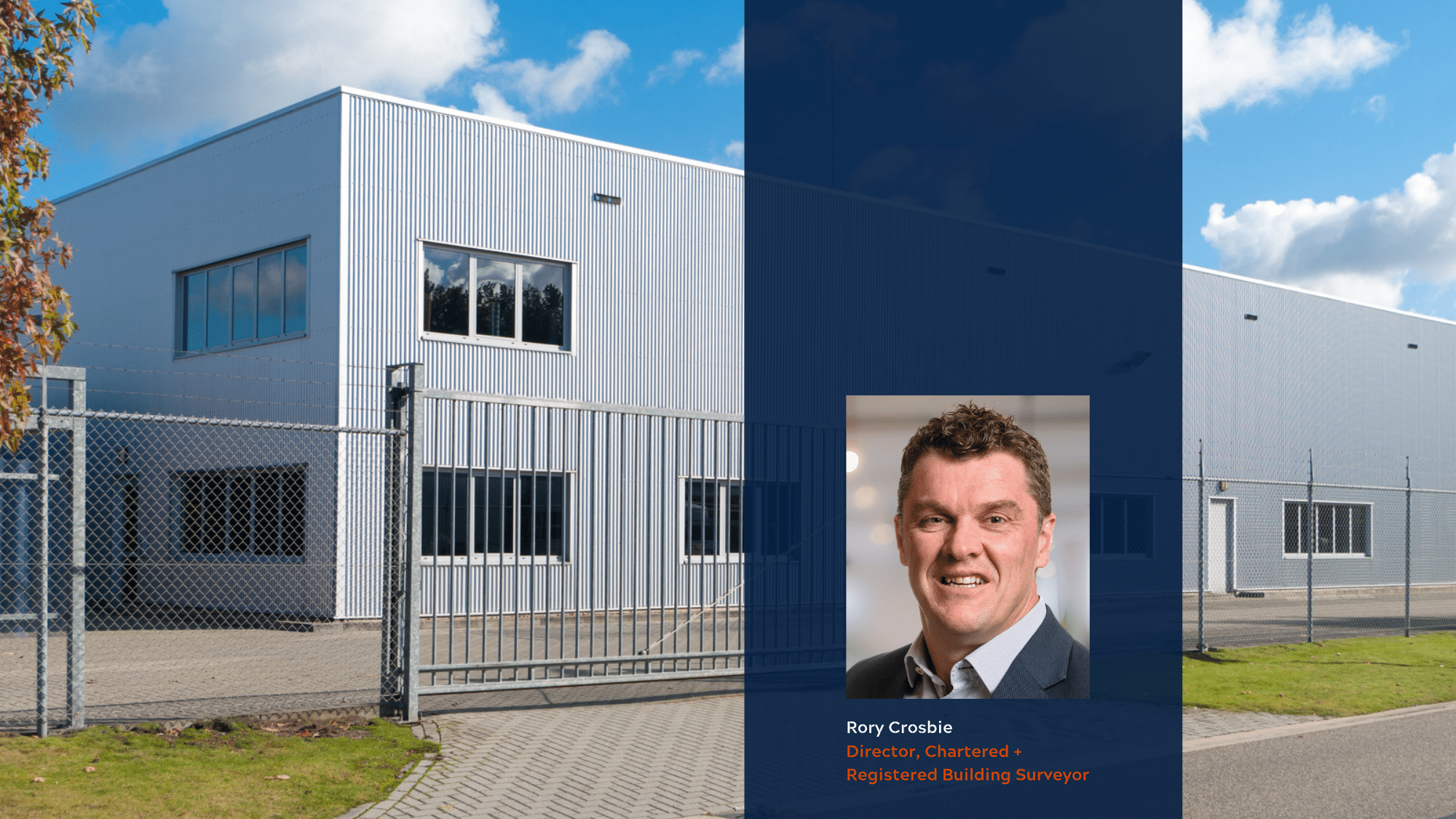
When acquiring commercial property, most buyers understand the need for technical due diligence – or TDD – to reveal building defects that could materially affect the deal. But some of the most important findings are less obvious, yet can still significantly impact the performance and value of the asset.
Prendos Director and Chartered and Registered Building Surveyor Rory Crosbie says effective TDD needs to look beyond building defects at a wide range of risks that could affect the transaction. Crucially, it should also give the purchaser actionable insight into how these could influence their negotiations.
“The question isn’t just what’s wrong with the building,” says Rory, “it’s what does this mean for the buyer?”
With decades of TDD experience behind him, Rory highlights five less obvious risks that good TDD will identify, giving the purchaser both the insight and the leverage they need to negotiate a sound commercial property transaction.
1. Future costs beyond the purchase price
An asset can look like a solid investment today, but carry substantial repair, renewal and maintenance cost over its lifecycle. So it’s important to go beyond the immediate defects list and consider whole-of-life cost. That’s a much bigger question than ‘what will this leaking roof cost to repair’, because it requires both accurate cost estimates – preferably by a professional QS – and strategic maintenance planning input to optimise R&M timing.
On a recent engagement for a client acquiring a near-new storage facility, Rory says his TDD identified a number of deficiencies with potential impacts over the short, medium and long term. But his assessment didn’t stop there. A 30-year CAPEX and R&M plan – supported by cost estimates from Prendos’ in-house QS team – gave the purchaser full visibility of likely expenditure, helping them assess the true cost of ownership. That insight ultimately paid off by supporting both price negotiations and effective maintenance planning, and providing the client’s property managers with a useful roadmap following acquisition of the asset.
2. Compliance and documentation gaps
Incomplete, unavailable or inconsistent documentation doesn’t necessarily mean there’s an issue with the building – but that uncertainty itself can be a risk that needs resolving.
Rory describes a recent example where building consent documentation was missing from the property file. What was surprising in this case is that the prospective purchaser was the territorial authority responsible for issuing the consent in the first place.
“I had to tell them – you can buy this building, but I can’t find the building consent information relating to it. It all looks OK, but…”
That ‘but’ pinpoints the issue – if the documentation is missing, there are no guarantees. Effective TDD will not only investigate what can be seen ‘on the ground’, flagging any health and safety, hazardous materials and regulatory issues, but it will also include a careful review of the property files and documentation to highlight gaps there too.
3. A building that doesn’t do what you need it to do
TDD shouldn’t just ask whether an asset is in good condition – it also needs to consider fitness for purpose, especially if the purchaser has plans for redevelopment, conversion or a different use.
“We’ve had a client saying, ‘We want to convert that building into a hotel’,” says Rory, “and then you realise that the floor-to-ceiling height isn’t high enough and you can’t get air conditioning in.”
That’s a great illustration of the importance of knowing each client’s situation and their future plans for the asset they’re acquiring. There may be absolutely nothing “wrong” with the building, but it simply can’t support the purchaser’s intended use.
4. The risks you can’t see on inspection day
You can’t underestimate the value of local knowledge in TDD. Rory describes an engagement where he inspected a Dunedin property on a bright, sunny day. Nothing about the site conditions suggested a flood risk, but his knowledge of the local area prompted him to consider it. Then he noticed a photograph inside the building showing the entire site flooded during a previous major rainfall event.
Inspecting the building fabric and services on a single day can only tell you so much. Good TDD will also consider the broader context and asset history. Experience, local knowledge and a critical eye can reveal risks that aren’t always apparent on inspection day.
5. The risks that sit outside the lease
Commercial buildings are often acquired with a sitting tenant in place. In that case, the lease itself becomes a critical element of the transaction – and another area where TDD can flag potential issues.
Rory gives an example where Prendos assessed an older industrial property occupied by a long-term tenant. In this case, the tenant had repair and maintenance obligations under the lease, but when the team identified concerns around asbestos management, Rory was concerned this could still potentially expose the incoming owner to reputational risk.
“There might be some reputational damage if that got out, and it was understood who the owners were,” says Rory. “We highlighted the technical implications, so they could then make sure legally that they were protected from any potential issues.”
Technical findings translated to commercial meaning
The purpose of TDD isn’t to find reasons not to buy a building, or just to catalogue everything that could be improved. Effective TDD should identify the issues relevant to the transaction, and help the purchaser make an informed decision.
Sometimes a finding will affect the price, sometimes it will result in a programme of capital works, or require further specialist investigation, or additional legal protection. On occasion it may be significant enough to stop a deal from going ahead. But the important thing is that those decisions are made with the risks understood – even the least obvious ones.
If we can assist you with your TDD requirements or you would just like to know more, please fill in the form below or contact us here and we will be in touch.

